Table of Contents
Tucked behind the Annapurna and Dhaulagiri ranges, the old Kingdom of Lo, better known as Upper Mustang, feels like a place the modern world forgot. Its barren canyons, red cliffs, ancient cave monasteries, and walled villages look more like Tibet than Nepal. The Mustang Circuit Trek takes you through this extraordinary landscape and back along a different route, combining the best of the Kali Gandaki valley, Upper Mustang, and Lower Mustang into one rich journey. It is a trek for those who care as much about culture and history as they do about mountain views.
Overview of the Mustang Circuit Trek
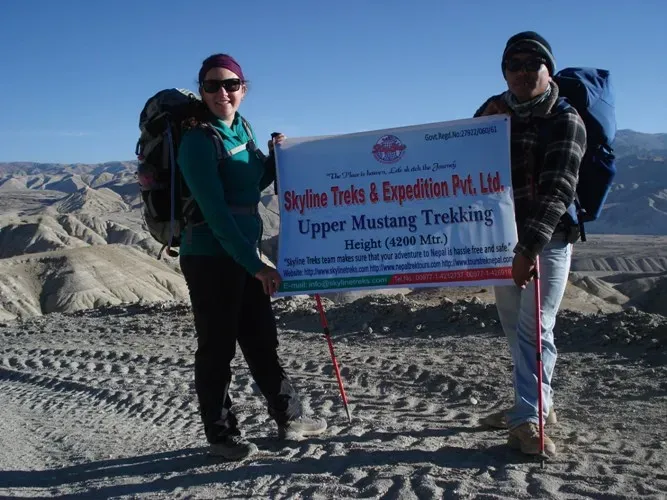
Upper Mustang lies in the rain shadow of the Himalayas, so it is dry, windswept, and dramatically eroded. Unlike the lush trails of Annapurna or Langtang, the terrain here is a high desert of ochre, rust, and gold. Whitewashed monasteries stand against deep blue skies, and prayer flags snap in the wind above villages that have changed little in centuries.
The circuit typically begins in Jomsom (2,720 m), follows the Kali Gandaki river north through Kagbeni to the walled capital of Lo Manthang (3,840 m), and returns by a different route, often crossing high ridges and visiting remote villages such as Ghar Gompa and Ghami. Most itineraries run 12 to 16 days, depending on side trips and how much time you spend acclimatizing and exploring.
The highest point on many routes is around 4,200 m, so the trek is more about culture and scenery than extreme altitude.
Why Choose the Mustang Circuit Trek?
A living Tibetan-Buddhist culture. Mustang was a semi-independent kingdom until the late twentieth century, and its Lobas still preserve Tibetan customs, language, and religious life. The region only opened to foreign trekkers in 1992, so it retains a sense of authenticity that is hard to find elsewhere.
Unique desert landscapes. Eroded canyons, layered cliffs, and sculpted rock formations create scenery unlike anywhere else on Nepal’s trekking map. Sunrise and sunset turn the hills orange and crimson.
Ancient monasteries and caves. Thousands of human-made caves are carved into the cliffs, some thousands of years old. Monasteries such as Thubchen, Jampa, and Chode hold remarkable murals and sacred art.
Fewer crowds and a rain-shadow climate. Mustang is protected from the monsoon, which makes it one of the few Nepali treks that can be enjoyed in the summer months.
Cultural festivals. The Tiji Festival, held annually in Lo Manthang, features masked dances, chanting, and ritual reenactments of a Buddhist legend. It is among the most colorful events in the Himalayas.
Detailed Route and Itinerary
Exact routes vary, but a common circuit follows this pattern.
Kathmandu to Pokhara, then Jomsom. Most trekkers travel to Pokhara and take a short mountain flight to Jomsom. The flight itself offers views of Dhaulagiri and Annapurna, and it is one of the most scenic in the country.
Jomsom to Kagbeni (2,810 m). The trail follows the Kali Gandaki, one of the deepest gorges on Earth. Kagbeni, a medieval-looking village of mud-brick houses, marks the gateway to Upper Mustang. Permits are checked here.
Kagbeni to Chele and Syangboche. The path climbs above the river and crosses windy ridges, with views of Nilgiri and the Annapurna range behind you. The land turns drier and more barren.
Syangboche to Ghami and Tsarang. Long mani walls, stone villages, and monasteries line the route. Ghami’s mani wall, among the longest in Nepal, is a highlight. Tsarang has an impressive fortress-like monastery and a former royal palace.
Lo Manthang (3,840 m). The walled capital is the cultural heart of the trek. Inside the ramparts you find narrow lanes, whitewashed houses, the former palace, and three major monasteries. Most itineraries include two nights here, allowing time to explore and take side trips to Chhoser Cave and Namgyal Gompa.
Return route via Ghar Gompa and Yara. Rather than retracing the same trail, the circuit takes a higher and more remote path. Ghar Gompa, around 1,200 years old, is associated with Guru Rinpoche. The route also passes Luri Gompa cave monastery and the village of Yara, giving you a wilder, more isolated feel.
Ghiling, Chhusang, and back to Jomsom. The final days follow the river again, with the Himalayan wall filling the skyline. Depending on the season, trekkers may finish by flight from Jomsom or continue on foot to Muktinath.
Some operators extend the trek to include Muktinath, one of the holiest pilgrimage sites for both Hindus and Buddhists, adding spiritual depth to the journey.
Best Time to Trek
Mustang offers a wider window than most Nepal treks.
-
Spring (March to May): Mild temperatures and clear views, though winds can be strong in the afternoons.
-
Summer (June to August): Because Mustang lies in the rain shadow, this is a good time to go, and the Tiji Festival usually takes place in May.
-
Autumn (September to November): Very stable weather, the most popular season, and ideal light for photography.
-
Winter (December to February): Cold and often closed to trekkers in the upper sections, so it is usually avoided.
The wind in the Kali Gandaki valley is a constant feature. It rises in the late morning and peaks in the afternoon, so most trekkers walk early in the day and finish before the strongest gusts.
Difficulty and Fitness
The Mustang Circuit Trek is considered moderate. Daily walks are typically five to seven hours, with some steep climbs and descents but no technical sections. While the altitude is not extreme, sustained days above 3,500 m require good acclimatization.
The main challenges are wind, dust, and dry air, which can cause dehydration and sore throats. Carry lip balm, sunscreen, and a scarf or buff. Basic fitness and a few weeks of hiking practice will be enough for most healthy trekkers.
Permits and Regulations
Upper Mustang is a restricted area, so trekkers must follow specific rules:
-
A special Upper Mustang restricted area permit, typically priced per person for the first ten days, with an additional daily charge afterward.
-
An Annapurna Conservation Area Project (ACAP) permit.
-
Trekking must be arranged through a registered trekking agency, and a licensed guide is required.
-
A minimum group size, usually two trekkers, applies for the restricted area permit.
Fees and regulations change, so check the latest details with your agency before departure.
Accommodation and Food
Teahouses are available in the main villages, ranging from simple rooms to more comfortable lodges in Lo Manthang. Rooms are usually twin-share with shared bathrooms. Meals center on dal bhat, noodles, momos, Tibetan bread, and soups. The dry climate limits local vegetables, so menus can feel repetitive, but portions are generous.
Charging electronics is possible in most villages, sometimes for a fee, and hot showers are available in larger settlements. In the remote sections, expect simple facilities.
What to Pack
-
Layered clothing, including a warm jacket for cold mornings and nights
-
Windproof jacket and trousers
-
Sturdy trekking boots and comfortable socks
-
Sun hat, sunglasses, and high-SPF sunscreen
-
Scarf or buff for dust and wind
-
Water bottle and purification tablets
-
Trekking poles, headlamp, and power bank
-
Personal medication and a basic first-aid kit
Responsible Trekking in Mustang
Mustang’s ecosystem and culture are fragile. Respect monasteries and sacred sites by removing hats and shoes where appropriate, walking clockwise around mani walls and stupas, and asking permission before photographing people or interiors. Avoid buying antiques or religious artifacts, and carry out non-biodegradable waste. Hiring local guides and staying in community-run lodges helps ensure the benefits of tourism stay within the region.
Conclusion
The Mustang Circuit Trek is more than a walk through spectacular scenery; it is a journey into a living Himalayan culture that few places in the world can match. From the deep gorge of the Kali Gandaki to the red cliffs, cave monasteries, and the walled city of Lo Manthang, every day brings something new and memorable. It is challenging enough to feel like an adventure, yet accessible to trekkers of moderate fitness, and its rain-shadow climate makes it a rare option outside the usual seasons.
If you want a trek that rewards curiosity, respects tradition, and delivers landscapes you will not see anywhere else in Nepal, the Mustang Circuit is a superb choice. Travel with a reputable operator, move at a mindful pace, and let the silence and color of the forbidden kingdom stay with you long after you return home.
